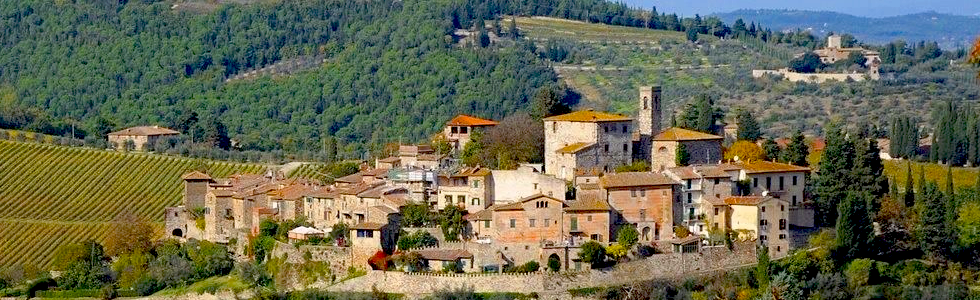
“Chianti”, usually refers to the Chianti Classico wine region of the province of Tuscany, Italy, located between the “art cities” of Florence to the north and Sienna to the south. “Chianti” is the name of the wine region but the wine from Chianti is known as Chianti Classico, to distinguish it from the other Chianti wines that come from areas of Tuscany outside Chianti the region. If you like wine, then one of the great pleasures of a visit to Chianti is to taste wines at the wineries where they are produced as well as to take advantage of the selections available in supermarkets to accompany your meals with an interesting (and inexpensive) bottle of Chianti Classico.
The Chianti countryside is famous for its gentle hills and characteristic combination of vineyards, olive groves and forests, dotted with red-tiled farmhouses, mediaeval churches and towers, abbeys, castles and magnificent villas. In addition to great places to stay, Chianti offers a wonderful range of things to do including wine tours, hot air ballooning, hiking, horseback riding, cycling, shopping, photography and so on and on.
Here in our Chianti sightseeing and tourist information portal we present an ever-increasing range of useful information about the main attractions, sights, food and events of Chianti as well as access to the best accommodations in Chianti. Tourist information offices are to be found in the larger towns and the equivalent in smaller places is a “Pro Loco” office.
On-line since 2001.
All about Chianti
It’s best to have clear in your mind the kind of location and what type of vacation accommodations you prefer before booking and to book before departure, to avoid losing your valuable vacation time searching for a place to stay. Similarly, it’s recommendable to select a base and stick to it. Changing your accommodation every 3-4 days can wipe out a whole day with each change.
The types of holiday accommodation offered in Chianti are well described here – in summary: hotels, villa hotels, villas, farmhouses, apartments and rooms, including B&B rooms. There is sometimes confusion about what constitutes a “villa” in Chianti. A true villa is a large structure with numerous rooms, while a family-sized, stand-alone house is basically going to be a farmhouse, a casa colonica. What type of accommodation you pick for your stay in Chianti basically hinges on how many of you there are, on whether you want a swimming pool and/or garden or not and on your budget. Beautiful accommodation is available in the towns and countryside of Chianti. You can expect to rent a comfortable village or rural self-catering apartment accommodation with a private swimming pool for less than the price of a hotel room in a city. In addition, there are rooms with and without breakfast available at wineries and in towns and villages throughout Chianti, Italy.
Location, aside from the town you want to be near, is basically a choice between town or countryside. Your mode of transport will play a role in this decision, as will whether you plan to eat and spend your evenings where you are staying or to be out and about.
Dining out in Chianti is inexpensive compared with most other tourist destinations in Europe and if you stay in the country or rent an apartment in town, your accommodation will most likely be self-catering. This doesn’t mean you have to cook a dinner from the ground up every night. Supermarkets, other speciality food outlets and weekly open air markets offer a very good range of freshly cooked food as well as a large range of cold cuts and cheeses that you can take home for dinner on your own terrace.
Chianti Villa Vacation Rentals
Chianti Agriturismi (farm stays)
Chianti Wine Tasting Tours
Chianti Bicycle Routes
Wild Orchids of Tuscany
Chianti Vacation Apartments
Chianti Bed and Breakfast rooms
Wines of Chianti and Tuscany
Chianti Castles Route
Chianti Parish Churches
Click here for the best accommodation options in Chianti, Italy!